
MyEC
Internal dashboard for EC news, events, resources, and more. Log-in required.


Grounded in the liberal arts and sciences, Elmira College provides a collaborative and supportive environment that enables students to become active learners, effective leaders, responsible community members, and globally engaged citizens.

The legacy of academic excellence at Elmira College runs deep with a heritage and culture that have been forward-thinking from day one, as the first college for women with a course study equivalent to men's.
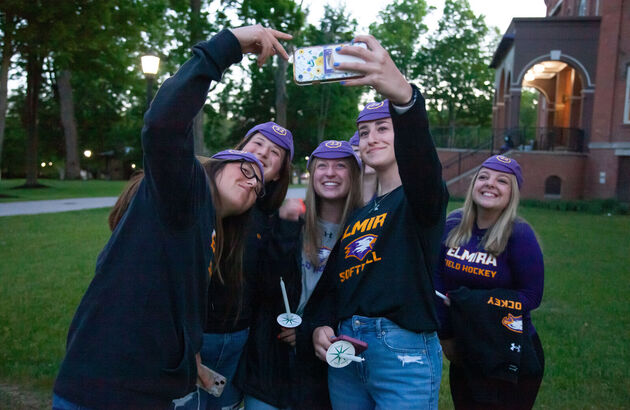
At Elmira, you’ll have opportunities that shape your future, raise your sights and equip you with targeted tools and skills to succeed in the professional world. Join a community that’s close-knit, fun-loving, and just the right amount of quirky.
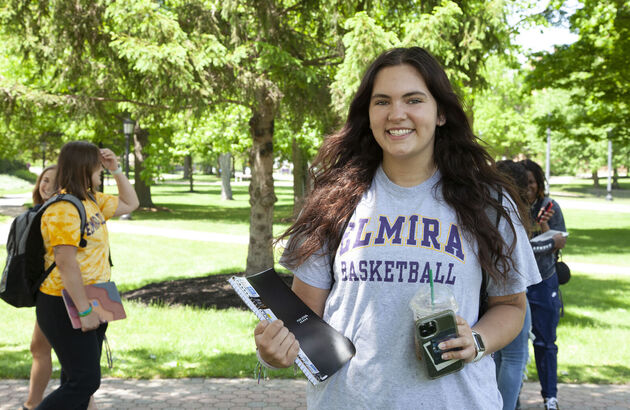
Elmira College makes a private education more affordable than you realize, with a number of ways to get the financial assistance you may need. Our financial aid office can guide you through options, including scholarships, grants, loans, and work-study programs.

Elmira College includes meeting students from around the world, participating in Elmira traditions, completing community service projects, and hopping into a pickup kickball game.

Elmira College provides you with a foundation for future success.

The home of the three-time NCAA National Champion Elmira College Soaring Eagles.

Elmira College alumni stay connected and engaged with the College long after they graduate.

Gifts to Elmira College ensure excellent academic and co-curricular opportunities for generations of EC students.
Internal dashboard for EC news, events, resources, and more. Log-in required.

Looking for a small, close-knit campus filled with incredible, hands-on learning opportunities? Our Admissions Office can help make Elmira College YOUR place.

With over 35 majors and minor areas of concentration, Elmira College lays the foundation for a diverse, cross discipline education, encouraging you to both specialize and explore.

Check out our news section to learn about all that's going on at Elmira College.

The EC campus map can help you find your way around campus and find the best parking spot.

Looking for registration deadlines, spring break or when grades are due? Our academic calendar has all of the important events for this academic year.
Info For

This is the final of five weekly articles about our First Year Seminar courses. These articles help incoming students identify which of the Term I FYS course choices they like best so that they can indicate their choices by June 30.
In this article, you’ll find the First Year Seminar course descriptions for four courses, which are ideal if you’re interested in nature, science, and art. No matter the topic you choose, each course will teach you skills for “how to college.”
Once you’re ready to rank your favorite options, complete the course selection form on your admissions portal by the end of June. Questions? Reach out to the Admissions Office at (607) 735-1724 or admissions@elmira.edu.

Led by Derek Chalfant, Professor of Art, this course explores how environmental issues connect to the social, political, cultural, and economic systems that impact the future of the planet and those that call it home. You’ll learn how your own work as an artist or designer can comment on, interact with, and impact the world. You’ll develop collaborative and creative individual projects that respond to environmental sustainability and related social issues.
“This course went above my expectations and is ideal for anyone interested in a crafty, think outside of the box, and hands-on course,” shared Eve Montanarella '28. “Professor Chalfant brought hands-on experiences and real-life situations to class time. We did many crafty things. We also presented our pieces to the class, which helped me get more comfortable presenting in my other classes.”

Suellen Dragon, Lecturer in Biology, will take you on a walk, physically and metaphorically. She’ll trade the classroom for the trails and help you explore the forest through the eyes of a biologist. Along the way, you’ll sharpen your critical thinking, observation, discussion, and reflective writing skills, all while learning how to approach complex questions about the natural world. While set in nature, this course is about walking you through how to ask good questions, make thoughtful connections, and engage deeply with your surroundings—skills that apply in any major and any field.
“This course was a perfect blend of developing skills for college and taking time to recenter and refocus while I adjusted to college life,” shared Zoe Anna Weselak '29, a Nursing major. “Reading articles and doing research for presentations or papers taught me how to isolate important information that is worth looking deeper into. This is a very important skill for college. We also did some assignments that involved reflection and were relevant to students’ individual goals, an exercise that I feel is important for students to understand their why and motivate them further. The hikes brought us closer to nature and acted as a space separate from college work to recharge and return with fresh inspiration.”

Love a hike in the woods? Then join Dr. Trevor Browning, Assistant Professor of Environmental Science, in his course that takes you outside in the Southern Tier of New York to see up close how geology created the area’s physical landscape. When indoors, you’ll read from accounts of people like Henry David Thoreau, Anne LaBastille, and Annie Dillard who experienced the Romantic and meditative effects of nature.
“This was an amazing course to explore unique environments near campus,” shared Corban Melie ’28. “It was coupled with information about the local area. We also read passages that gave us interesting topics to talk about while walking in nature. The best part about the course overall was that we were outside every day, which was a nice change from a classroom setting.”

In this interactive and project-based course for honors students, Dr. Abbi Paulson, Associate Professor of Biology, will guide you through an exploration of medical advancements, including those from history and those yet to come. You’ll look at what’s on the horizon and how technology, such as AI, is changing the practice of medicine.
“I'm so excited for this course!” exclaimed Dr. Abbi Paulson, Associate Professor of Biology and Director of the Medical Laboratory Sciences Program. “While building foundational college skills, we'll also explore amazing topics in medicine together. For these topics, we'll examine societal impacts while learning some of the basic science behind them.”


